How APODISSI is connecting industry, training and EU partners to build Nigeria’s pharma workforce, from the 8th PMG-MAN Expo, Lagos
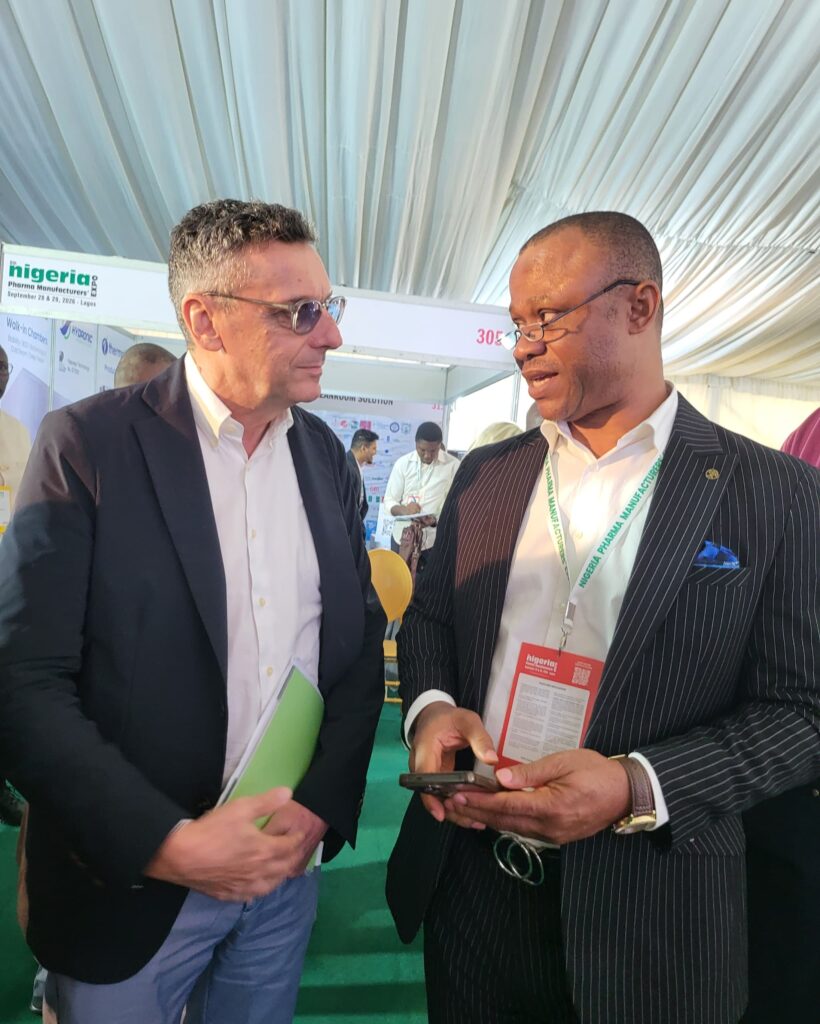
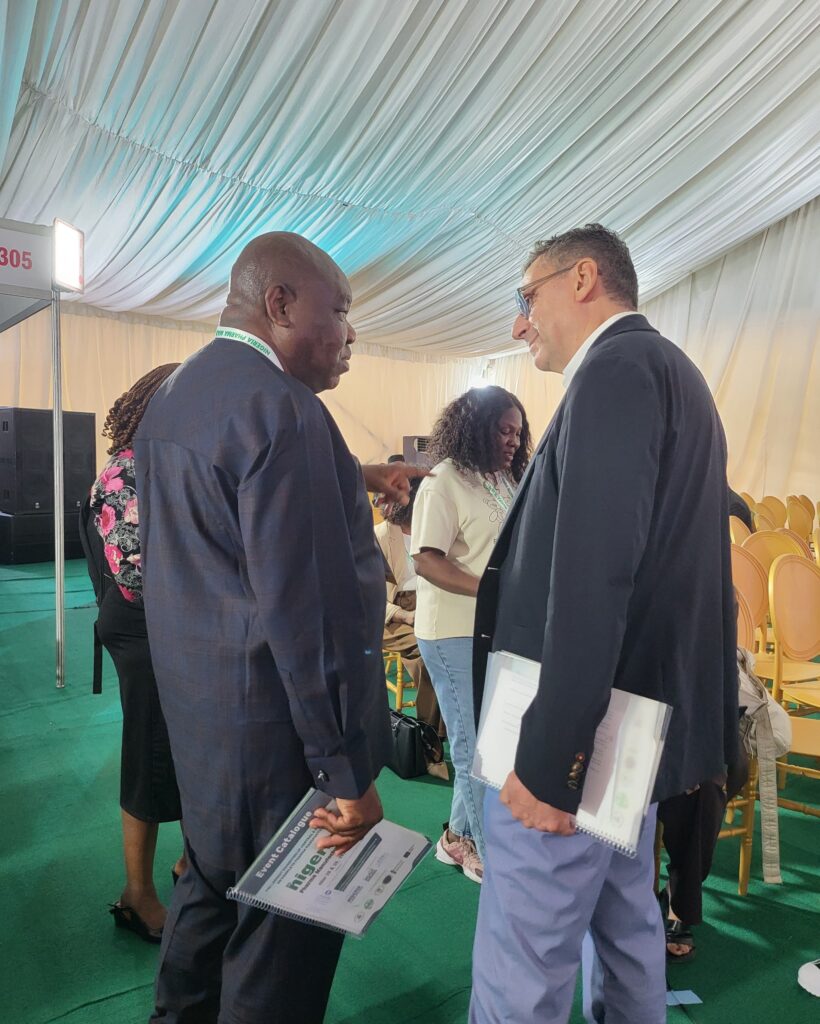
Manufacturing is inherently complex, and pharmaceutical manufacturing more so, given the demands of logistics, supply chains, power, machinery and hygiene. No nation can grow or prosper if it does not manufacture what it consumes. It was against this backdrop that the 8th National Pharmaceutical Manufacturing Expo (PMG-MAN), the largest pharmaceutical event in Nigeria and West Africa, took place in Lagos on 28 and 29 September 2026. APODISSI took part in the expo, with its Managing Director, Adriano Mauro, speaking on the first day in the panel dedicated to workforce development.
PMG-MAN is the only platform of its kind for pharmaceutical manufacturing in Central and West Africa, forging partnerships and shaping the future of the industry. It brings together more than 200 pharmaceutical and life science manufacturing companies working to close the gap in access to quality, safe medicines in Nigeria and across Africa.
Opening the event, the Honourable Minister of State for Health and Social Welfare, Dr. Iziaq Adekunle Salako, addressed the fragmentation that persists across regional borders. He observed that, given present funding constraints, Nigeria should be defined by what it is able to produce, so as to safeguard the health of its people when global supply chains are disrupted, and should move from dependency to capability.
The Director General of NAFDAC, Prof. Adeyeye, recalled that a survey of the top 20 locally manufactured products around 2018 found capacity utilisation at between 50% and 60%. Towards the end of 2019, with the onset of the pandemic, a pressing question confronted Nigeria: when would the country begin producing its own vaccines?
Pharm. Patrick Ajah, CEO of May & Baker, the oldest pharmaceutical company in Nigeria, added that PMG-MAN has come far and remains critical to the country’s trajectory, which must be anchored in sustainability and supported by partnership with the Federal Government and the Bank of Industry. The gap once stood at 30% local manufacture to 70% imports; the past two years have brought a significant change, which is helping to take Nigeria where it needs to be, according to the Director of Food and Drugs, Mrs Adiola Olufowobi Yusuf.
To sustain this momentum and align with international standards, the 5plus5 Regulatory Guide has opened opportunities for local manufacturers in the production of essential products and in contract manufacturing, while reducing the industry’s reliance on imports. Nigeria has between 150 and 180 manufacturing industries, contributing 30 to 50% of locally consumed products. Closing the remaining gap will require a capable workforce, built through strong human capital.
Workforce development is central to addressing many of the pressing challenges in pharmaceutical manufacturing, chiefly the skills gap in technology and technical expertise. On the first day, the panel “Building a future-ready workforce for pharmaceutical manufacturing“, moderated by Dr. Maharajan Muthu, Chief of Health at UNICEF Nigeria, sought practical, industry-led strategies for developing the talent the sector needs. It brought together Dr. Fatima Gohar of UNICEF, Demba Diack of Expertise France leading the QualiMED Africa project in Nigeria, Uchenna Ugwuleke of USP, Hitesh Upreti of Chromedix, and Adriano Mauro, Co-Founder and Managing Director of APODISSI. Mr. Mauro was asked which skills are missing among young professionals entering the sector, and how these gaps affect productivity and compliance. He began with his own industry background: earlier in his career, he was Head of Product Design and Development at Alifax, an Italian company that designs and manufactures automated laboratory diagnostic instruments used in hospitals around the world. He has therefore seen from the inside what it takes to design, validate and manufacture a regulated health product, and how much depends on the skills of the people on the production line.
“Most young people entering pharmaceutical manufacturing in Nigeria are not lacking intelligence or motivation,” he said. “They are lacking the right preparation for a factory floor.” He pointed to pharmacy technicians, who should be a backbone of the workforce: Nigeria has around 5,800 of them, yet only an estimated 5 to 10% work in manufacturing, because their training is built mainly for dispensing and clinical support. With national projections indicating a need for 20,000 to 30,000 technicians by 2030, and local production growing fast, the mismatch between what the training system produces and what manufacturers need is clear.
Mr. Mauro identified four gaps that recur in APODISSI’s analysis with industry. The first is quality culture: knowing the rules of Good Manufacturing Practice is not enough, and people need to live them by following standard operating procedures (SOPs), documenting accurately and reporting deviations. The second is practical industrial exposure, as most placements take place in hospitals and community pharmacies rather than production plants, so graduates arrive without ever having handled equipment, calibration, validation or a batch record. The third is digital skills: research conducted by APODISSI for GIZ SEDIN across five Nigerian states (Edo, Lagos, Niger, Ogun and Plateau) found that health workers use their phones every day but have very low familiarity with emerging technologies, a gap that follows young people into industry. The fourth is transversal skills, such as problem-solving, teamwork, communication and taking responsibility, which make someone productive in their first year rather than their third.
Looking ahead, he explained that collaborative robots (cobots) will increasingly work side by side with operators on packaging, inspection and material handling, helping to automate tasks rather than replace workers. Young technicians will need to work safely alongside them, set up simple tasks and understand how an automated step is validated under GMP. APODISSI’s sister company, AREA, is already addressing this in North Africa through CobotsVETMed, an Erasmus+ project in Algeria and Tunisia that trains students and teachers on cobots in virtual environments before they touch a real machine, a model that can be transferred to Nigeria. “When a school cannot afford a production line, a virtual one is the next best place to learn,” he observed.
The same SEDIN research, which led to a health innovation hackathon, showed that e-learning was seen as the best way to address the training gap: young professionals want to learn, and on the tools they already use. To close these gaps, Mr. Mauro returned to APODISSI’s motto, “We Connect the Dots”: no single actor can solve the challenge alone. This is the logic behind PharmaVET, an Erasmus+ proposal submitted by APODISSI with partners who each hold one piece of the puzzle: PMG-MAN, bringing the voice of industry and internship opportunities; the National Board for Technical Education (NBTE), for accreditation within the national system; colleges of health technology in Ilorin and Shao, with their classrooms and learners; ITS Natta from Italy, with its experience in pharmaceutical technical education; and Euromasc from Norway, for quality assurance in vocational education and training. The proposal aims to design the first competency-based pharma technician pathway aligned with European qualification standards, training 40 trainers, piloting with 80 learners, engaging at least 50 companies and, after accreditation, reaching 20 schools.
Mr. Mauro then presented the Smart Step e-learning platform, APODISSI’s own platform, as the digital backbone of this model. Available in six languages and used by more than 3,000 learners across Africa, Smart Step offers ten career paths, including collaborative robotics, with further fields being added. Learners can study GMP, quality and digital competencies anywhere, including on a smartphone and at their own pace, and through scenario-based exercises can practise what to do when a batch goes wrong before facing it in a real plant. Trainers receive data on who is struggling, automatic transcription and summaries make learning more accessible for learners with disabilities and those far from urban centres, and every competency earned is certified with a blockchain-based digital credential that employers can trust.
He closed with an invitation to “connect the dots together“. Manufacturers were invited to help shape the curriculum, host interns, use Smart Step to train their own staff and post vacancies on the platform free of charge. Development partners and donors were reminded that PharmaVET is a starting point, not the finish line, and that APODISSI is ready to scale the model to more schools and states, with dedicated support for young women, persons with disabilities and underserved youth. Beyond training, APODISSI offers skills and market research, industry hackathons and lab-to-market support, from business plans to investor search, building on its work with GIZ, the African Union and the European Commission.
Among the other panellists, Uchenna Ugwuleke, drawing on her experience of the Medsure project, outlined the expertise the value chain requires, and where it is lacking: research and development scientists, pharmaceutical engineers, technology implementation specialists, writers able to translate technical work for wider understanding, and supply chain experts. These missing skills among young professionals entering the sector can affect productivity.
The ecosystem was represented across all fields, including scientists, manufacturers, captains of industry and the EU Delegation, represented by Massimo De Luca. Speakers called for greater harmonisation, coordination and mutual recognition among regulatory institutions, to prevent unhealthy rivalry between government agencies that undermines the manufacturing value chain.